01
Stabilize damage and defense
Early Silent decks need enough practical damage to finish fights and enough defensive consistency to avoid losing HP whenever the draw order is awkward.
Silent wants enough damage and defense to stabilize the opening, then becomes much stronger when draw, discard, Weak, Shiv volume, or card-play effects turn ordinary hands into a repeatable engine. The important draft question is not which archetype a card belongs to, but whether it improves consistency, solves a missing combat role, or converts signals that are already present.
Silent starts with a larger deck and relatively weak baseline turns. Early rewards should first improve damage, defensive reliability, and card access. Shiv, Sly, discard, Poison, and other packages become real directions only after enough pieces make them more reliable than simply improving the current deck.
Early Silent decks need enough practical damage to finish fights and enough defensive consistency to avoid losing HP whenever the draw order is awkward.
Draw, discard, and hand filtering are valuable before they become combo pieces because they reduce the number of turns where the correct answer exists in the deck but not in the hand.
Shiv payoff, Sly payoff, Poison scaling, and other specialized cards become much safer once the deck already contains repeatable enablers. Existing relationships should pull future picks instead of speculative archetype labels pushing them.
After Image, Weak chains, Dexterity, card-play Block, relics, or other engines can eventually solve defense without adding more ordinary Block cards. Once a role is covered, future rewards need a different reason to enter the deck.
Artifact, status pressure, multi-hit attacks, Ringing, and other encounter mechanics can make a normally optional card become one of the most valuable rewards in the current route.
Silent benefits heavily from finding the right cards on the right turns. Once a job is solved, adding another marginal card can reduce consistency by delaying access to the engine that already works.
A card does not have one permanent answer. These profiles show how its value changes with run phase, current deck signals, upgrades, and upcoming Boss context.
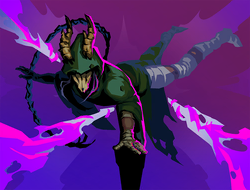
One of Silent’s safest card-access picks: strong without a dedicated engine and increasingly valuable once discard or Sly turns filtering into payoff.
Early card access improves weak starter hands even before discard becomes a formal engine.
By mid-run the deck usually has better targets to find and more discard relationships to exploit.
Late decks benefit heavily from finding powers, defense, scaling, and matchup answers on the turns they matter.
The discard stops being a filtering cost and becomes an engine trigger.
Acrobatics directly improves access to the cards already carrying the run.
Extra cards have lower value when the turn cannot afford to convert them into output.
Improving the card’s access density strengthens both generic cycling and any discard engine already present.
Soul Fysh pressures draw quality with statuses, so extra card access and discard help Silent keep functional hands.

Reliable Block plus card access makes Backflip useful in almost any Silent shell without demanding an archetype commitment.
Block plus draw stabilizes early hands without locking the deck into a package.
It becomes more efficient as Dexterity and stronger draw targets enter the deck.
Even when raw Block matters less, card access remains useful for assembling high-impact turns.
Dexterity increases the defensive density of a card the deck already wants for draw.
Backflip solves two common consistency problems in one deck slot.
The Block half becomes less important once another defensive engine reliably covers enemy turns.
The upgrade improves the defensive side of a card that is already valuable for draw, increasing its output without changing its role.

A powerful hand-reset tool that turns bad draw order into another chance at the cards the turn actually needs while also activating discard relationships.
Even early, resetting a poor starter-heavy hand can convert a dead turn into useful output.
Discard relationships and stronger draw targets make the hand reset increasingly valuable.
Late fights reward finding exact answers, powers, and scaling pieces on the correct turn.
Calculated Gamble is strongest when draw order itself is a major source of lost turns.
Discarding the hand can trigger additional value instead of only replacing cards.
A full-hand discard can fight a plan built around preserving specific cards for later turns.
The upgrade improves control over when the hand reset is available, which matters most in decks using it as a consistency tool rather than a one-off discard effect.
A full hand reset helps recover when Soul Fysh statuses damage draw quality and crowd important answers out of the hand.

Cheap hand filtering that becomes a real engine piece once discard and Sly payoffs exist, while remaining useful as consistency before that point.
Early filtering helps weak starter hands but may not solve urgent damage by itself.
Discard and Sly relationships make the filtering action increasingly productive.
Late decks benefit from cheap access to exact matchup answers while discarding low-value cards or statuses.
Prepared provides a cheap repeatable way to activate cards that care about discard.
Hand filtering becomes additional engine output when discarded cards themselves produce value.
Filtering does not replace the damage or Block required to survive an immediate combat problem.
The upgrade improves the density of the filtering effect, making one deck slot do more consistency work.
Prepared helps Silent discard statuses and preserve functional draw quality against Soul Fysh.

A defensive engine that rewards Silent for doing what many strong decks already want to do: play many cheap cards, cycle quickly, and generate Shivs.
It can establish a scalable defensive direction early without requiring ordinary Block density.
Cheap-card, Shiv, and draw engines naturally increase the number of triggers each turn.
Dense card-play turns convert offense and cycling into meaningful defensive output during long fights.
Every additional card played increases the defensive return from the power.
Shivs turn offensive output into repeated After Image triggers.
After Image can become an alternative defensive engine instead of asking the deck to add many conventional Block cards.
Getting the power online reliably and early materially improves the defensive plan, especially when the deck is depending on it instead of ordinary Block cards.
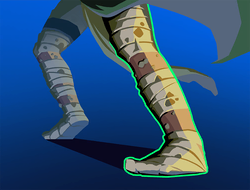
One of Silent’s cleanest defensive scaling pieces because Dexterity improves many ordinary Block cards without demanding a narrow combo.
Early Footwork creates a clear defensive scaling direction while common Block cards are still plentiful.
More Block density and harder enemy turns increase the practical value of Dexterity.
Reliable defensive scaling remains valuable as Boss turns become too large for baseline Block values.
More Block cards means more total output converted from every point of Dexterity.
Footwork directly addresses the problem of baseline Block values failing in longer fights.
Dexterity is less central when After Image, relic triggers, or another non-Block engine already covers defense.
Improving the persistent Dexterity scaling increases the value of many future defensive cards at once.
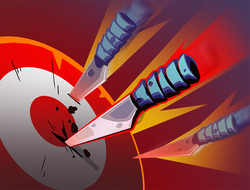
One of Silent’s best Shiv damage payoffs, and safer to speculate on than many payoff cards because useful Shiv generators are common and independently playable.
It can be a reasonable speculative early pick because STS2 offers many independently useful Shiv generators.
Once Shiv volume is visible, Accuracy becomes a clear multiplier on an existing damage plan.
Late value depends on whether Shiv damage still needs scaling or whether another role has become the real bottleneck.
Existing Shiv volume turns the power from speculative scaling into immediate recurring damage.
Accuracy solves the specific problem of high Shiv volume producing insufficient damage.
Without generators the card contributes setup without converting current draws into output.
The upgrade increases the payoff applied across repeated Shiv generation, so its value scales with every future Shiv played.

Efficient physical frontload that also produces Shiv volume, making it useful before a dedicated Shiv engine exists and better once one appears.
Efficient damage and Shiv generation address common early Silent weaknesses at the same time.
Shiv, Strength, relic, and card-play relationships can increase the value of both halves of the card.
It remains useful in established Shiv engines but is easier to skip once damage and card-play volume are solved.
Leading Strike provides practical frontload without becoming a pure dead-end attack.
The generated Shivs become more valuable once Accuracy, After Image, relics, or similar effects are active.
Once damage is reliable, another generator needs a stronger reason than simply being efficient.
The card already performs its core frontload and generator role; upgrade priority rises when the deck is heavily converting Shiv volume.

Good early damage and card-play volume whose self-Exhaust reduces the long-term cost of taking it before a complete Shiv engine exists.
Its immediate damage helps stabilize Act 1 while self-Exhaust limits later deck pollution.
Existing Shiv and card-play payoff can keep the card relevant after its early frontload role declines.
Mature decks often need denser scaling or utility unless the Shiv triggers themselves remain important.
Blade Dance gives efficient short-term damage at the point where the starter deck most needs help.
Each Shiv can trigger additional Block, relic, or power effects.
Once early damage is no longer a problem, one-use damage needs a stronger synergy reason.
Increasing the Shiv output improves both direct damage and every effect that rewards the additional card plays.

Dense defense plus Weak makes Leg Sweep one of Silent’s safest defensive rewards, especially when one card must handle a dangerous enemy turn.
One dense defensive card can stabilize dangerous turns without requiring several weaker Block picks.
Weak becomes increasingly valuable as enemy attacks grow and the deck needs more efficient defensive density.
Large Boss attacks and matchup-specific turns continue to reward dense Block and Weak from one draw.
Leg Sweep provides both immediate mitigation and longer defensive value through Weak.
One high-impact defensive card is more reliable than drawing several small Block cards together.
Part of the card’s value becomes redundant when the enemy is already reliably Weak every turn.
Improving an already dense defensive card increases the chance that one draw can solve the entire dangerous turn.
Ringing can restrict the player to one card on a dangerous turn, making a single high-impact Block card such as Leg Sweep especially valuable.

Flexible physical-damage utility that becomes especially valuable when Artifact, Block, or missing Vulnerable would otherwise prevent the deck from converting attacks efficiently.
Physical damage is common early, but Artifact and Block removal may not yet be urgent enough to make the utility premium.
More developed physical and debuff plans increase the value of efficient Artifact stripping and Vulnerable.
Late Bosses with Artifact or defensive mechanics can make the utility more important than another raw attack.
Vulnerable has more value when the deck is already converting many attacks into damage.
Removing Artifact allows Weak and Vulnerable plans to function when they would otherwise be blocked.
The card loses marginal value when Artifact removal and Vulnerable are already consistently available.
The base utility already solves Artifact and damage-conversion problems; upgrade value rises when Vulnerable is a central damage multiplier.
Aeonglass begins with Artifact, so efficient Artifact removal makes Silent’s Weak and Vulnerable tools easier to apply.

A matchup-sensitive defensive card whose value rises sharply against multi-hit or Strength-driven turns that ordinary Block handles inefficiently.
It is useful when early encounters already reward attack reduction, but generic Block may sometimes be more flexible.
Harder multi-hit and Strength-based encounters increase the amount of damage prevented per card.
Boss-specific dangerous turns can make one copy significantly more valuable than another ordinary Block card.
Strength reduction scales across every hit of a multi-hit enemy attack.
Piercing Wail can patch one dangerous turn without requiring a full defensive rebuild.
Additional copies lose value when the deck already has enough dense answers to those turns.
The card’s primary value comes from having the correct matchup effect available; the upgrade improves that answer but does not create the matchup itself.
High-Ascension Silent play specifically values Piercing Wail as a strong matchup answer into Test Subject.

A low-maintenance passive damage plan that can supply long-fight scaling and Poison support without asking the deck to fill itself with weak Poison starters.
It can establish scaling early but does less to solve immediate frontload than efficient attacks.
Longer fights and existing Poison relationships give recurring passive damage more time to matter.
Passive scaling remains useful in Boss fights when the deck can defend long enough for it to accumulate.
Noxious Fumes gives the deck damage progression without requiring repeated attack draws.
Reliable recurring Poison makes specialized payoff cards substantially safer.
A second slower damage plan can be unnecessary when existing physical damage already solves fights.
Improving recurring passive output compounds over multiple turns and strengthens any Poison payoff already present.

A powerful Poison payoff whose ceiling is real, but whose pick value depends on whether reliable Poison application already exists rather than on the payoff alone.
Accelerant moved from Rare to Uncommon in Beta. Its availability changes, but it still needs reliable Poison application before it becomes a justified payoff pick.
See Main vs Beta changes →Early Accelerant often asks future rewards to supply Poison before the card can become useful.
Once Poison application is established, the payoff can transform existing stacks into real scaling.
Late value is high only when the deck already has enough Poison density for the additional triggers to remain sustainable.
Accelerant needs enough Poison already on enemies to convert its effect into meaningful damage.
It can become the payoff that turns basic Poison application into a viable long-fight plan.
A payoff without repeatable Poison forces future card rewards to repair the current pick.
When Poison is already established, improving the number of extra triggers directly increases the payoff the deck is built to exploit.

A practical physical damage pick that becomes much better when Silent is already playing many cards, but should still be judged against the run’s current need for frontload.
Immediate damage is one of Silent’s most important early needs, and early decks can exploit the payoff with cheap cards and Shivs.
Existing card-play volume can keep the damage relevant, but stronger scaling engines begin competing for deck space.
Late decks usually need a specific card-play reason rather than another generic frontload piece.
Strangle can be the correct reward when surviving the next fights requires immediate frontload rather than a theoretically stronger long-term utility card.
Shivs and cheap cards create more opportunities to convert the effect into damage.
Once damage is reliable, another attack needs stronger scaling or utility to justify the slot.
Upgrade value rises when the current deck is already producing enough follow-up card plays to multiply the damage.

A high-ceiling energy converter that is much less impressive when Silent’s deck is already dominated by cheap cards and draw that wants to continue after the card is played.
Early Silent decks usually do not yet have the draw density and expensive output required to justify the setup.
The card becomes playable once large hands and genuine energy pressure already exist together.
Late decks can exploit it strongly, but cheap high-cycle engines can also make it nearly irrelevant.
More cards in hand creates more potential energy to cheat.
Bullet Time needs meaningful energy costs to convert before its restriction is worthwhile.
A deck already paying little energy gains very little from making the hand free.
The upgrade improves the conversion only after the deck already satisfies the structural conditions that make Bullet Time worth playing.

A steady Shiv generator whose value can jump dramatically when recurring Shivs simultaneously convert Strength, card-play Block, and Shiv payoff every turn.
Recurring damage can be useful early, but a setup power is slower than direct frontload when survival is urgent.
Its value depends strongly on whether Shiv, Strength, and card-play relationships have developed.
A mature engine can make every recurring Shiv valuable, while an unrelated deck may gain almost nothing.
Every recurring Shiv becomes more valuable as attack scaling increases.
The recurring Shiv contributes defense as well as damage when card plays already generate Block.
Existing Shiv powers and relics convert one recurring Shiv into more than its printed damage.
When the deck is relying on the recurring Shiv, improving early access to the power increases the number of turns that benefit from its damage and trigger relationships.

A tempting Sly engine that usually asks for too much setup before returning value: energy, an upgrade, enough Skills, discard access, and enough future deck cycles.
Early fights reward immediate output, while Master Planner asks future cards and upgrades to make the initial pick worthwhile.
A developed Skill and discard shell can create a real use case, but the delayed payoff remains expensive.
Mature decks may finally have enough structure, but there are fewer remaining floors and less time for the delayed transformation to matter.
The payoff needs enough meaningful Skills to transform before the setup card can justify itself.
Sly has much more value when the deck can trigger it deliberately and repeatedly.
Master Planner does not solve the current fight quickly enough when damage or defense is still unstable.
If the card enters the deck at all, reducing its setup burden is central to making the delayed engine playable.

A spectacular payoff with a consistency requirement that ordinary Silent decks cannot reliably satisfy without already owning precise retain and draw-pile control.
The starter deck lacks the control required to make the condition dependable.
Most decks still gain more from reliable damage than from restructuring around an inconsistent payoff.
Only an already-complete retain and draw-control shell can turn the condition into repeatable late-game damage.
The card only becomes dependable when the deck can intentionally reach the required draw-pile count.
Retain allows the payoff to wait for the correct condition instead of demanding perfect draw order.
Larger decks make exact draw-pile alignment much harder and increase the chance the card remains unusable.
More damage does not solve the fundamental problem of getting the card playable on the correct draw-pile state.
Do not start with the card name. Start with the problem the current deck still fails to solve.
Am I drawing enough cards but still taking too many turns to finish normal or Elite fights?
Do bad enemy turns still force the deck to spend nearly every card and all available energy just to survive?
Are the correct answers already in the deck but arriving on the wrong turns?
Do Sly or discard-payoff cards exist but still depend on awkward draw combinations to activate?
Does the deck already have Shiv payoff but not enough generators to convert it consistently?
Am I already generating many Shivs but getting too little damage from those card plays?
Can the deck survive longer fights but still lacks a dependable way to finish them?
Are Artifact and enemy Block preventing Weak, Vulnerable, or physical burst turns from working?
Is an upcoming Boss or Elite threatening a multi-hit or single dangerous turn that ordinary Block handles poorly?
Skip another ordinary damage card once early frontload is already reliable.
Skip a discard payoff when reliable discard does not exist yet.
Skip specialized Poison payoff when Poison application is still hypothetical.
Do not assume every Shiv generator means the run should become a Shiv deck; demand an actual payoff or current damage need.
Once After Image, Dexterity, Weak, relic triggers, or another defensive engine has solved defense, ordinary Block cards need a stronger reason to enter the deck.
Do not add setup such as Master Planner just because the theoretical ceiling is high. Count how many turns, upgrades, and existing enablers are required before it contributes.
When a route or Boss creates a specific problem, a matchup card can be more valuable than a generally higher-ranked reward.
If the deck already finds its best cards consistently, adding another low-impact cycling card can make those cards harder to reach rather than easier.
Do not force an archetype from the first synergy card. Let multiple real signals confirm the direction.