01
Stabilize early fights
Act 1 rewards efficient damage and enough AoE to prevent normal fights from consuming too much HP. Once that damage requirement is solved, another interchangeable attack loses value quickly.
Ironclad wants enough efficient damage to stabilize the opening, but card rewards become increasingly conditional once that job is solved. Strong runs usually develop around a real engine such as self-damage into Strength, Exhaust into Block or draw, or a reliable defensive package. The important question is not whether a card is powerful in isolation, but whether the current deck already contains the signals that let the card solve a real problem.
Ironclad can move into Strength, self-damage, Exhaust, Block, or combinations of those packages, but the first few rewards should usually improve the run that actually exists. Taking a payoff before its engine appears creates dead or mediocre draws.
Act 1 rewards efficient damage and enough AoE to prevent normal fights from consuming too much HP. Once that damage requirement is solved, another interchangeable attack loses value quickly.
Ironclad has several strong Block options. The important distinction is whether the deck actually produces dependable Block, not whether it owns a powerful Block payoff on paper.
Self-damage makes Rupture better. Exhaust makes Feel No Pain and Dark Embrace better. Reliable Block makes Body Slam and Unmovable better. Strength generation makes a payoff such as Maul more valuable.
Once the deck contains meaningful powers, scaling, or defensive pieces, draw and controlled Exhaust become more valuable because they reduce the number of turns spent drawing low-impact cards.
Boss mechanics can change card value materially. High-impact Block, status control, debuff access, and Artifact stripping can become more important than a card’s generic ranking.
A card does not become correct simply because it is playable. Once a job is solved, adding another medium card can make the deck less consistent by delaying access to the cards that actually matter.
A card does not have one permanent answer. These profiles show how its value changes with run phase, current deck signals, upgrades, and upcoming Boss context.

A high-impact Block pick that becomes even better when the deck benefits from losing HP on its own turn.
It provides unusually large practical Block while early decks are still trying to stabilize HP loss.
It remains useful as defense and gains additional value if self-damage synergies have appeared.
It remains a useful high-impact defensive card, although mature decks may already have a stronger defensive engine.
The card directly solves a large defensive turn.
The HP loss becomes an engine trigger instead of only a cost.
A high-impact Block card is harder to exploit when spending its energy prevents the rest of the turn from functioning.
The upgrade improves the defensive output, but the base card already performs its core role.
Its Ringing sequence rewards a single high-impact Block card when card plays are constrained.
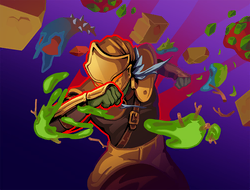
An early AoE solution whose value is highest before the deck already has multi-enemy fights covered.
Early multi-enemy fights create a real need for efficient AoE.
It remains functional damage and can contribute to self-damage engines, but its original AoE urgency is lower.
Late decks usually demand scaling, engine support, or specific matchup utility rather than another raw AoE attack.
AoE is the primary reason to take the card early.
Its HP loss can contribute to an existing self-damage engine.
Once its main job is already covered, the reward needs a stronger reason to justify another attack.
The available card evaluation specifically identifies the damage upgrade as meaningful for its early combat role.

A strong early frontload card that loses urgency once the deck no longer needs raw damage.
The available evaluation identifies it as capable of carrying early Act 1 damage almost by itself.
It still provides efficient damage but competes with more developed engine pieces.
Late decks generally do not need another pure frontload card unless a specific matchup still demands it.
Immediate damage is the card’s strongest role.
The HP cost can become a positive engine trigger.
The card falls off when immediate damage is no longer the deck’s problem.
The damage increase directly strengthens the reason the card is drafted in the first place.

A low-commitment defensive pick that improves both Block consistency and card access.
It stabilizes Block while preserving card access during the stage when the deck is still full of starter cards.
Block plus draw remains useful as stronger engine pieces enter the deck.
The available evaluation specifically describes it as a card that can remain attractive throughout the run.
It improves ordinary defensive turns.
Drawing while defending helps reach important cards without sacrificing the turn.
The upgrade improves Block but does not change the card’s fundamental consistency role.

A useful Block card whose value rises dramatically once the upgrade turns its Exhaust into controlled deck cleanup.
Even before a full Exhaust engine exists, the Block can stabilize early fights.
Controlled Exhaust becomes more useful as the deck accumulates weak cards, temporary cards, or Exhaust payoffs.
An upgraded copy can provide both defense and precise deck control.
Controlled Exhaust can trigger existing engine pieces.
Targeted Exhaust can remove cards that are actively harming draw quality.
The upgrade materially improves control over the card.
The available evaluation makes a sharp distinction between random Exhaust before the upgrade and targeted Exhaust after it.

Targeted Exhaust plus draw makes Burning Pact both a consistency card and one of the cleanest ways to activate an Exhaust engine.
Targeted Exhaust and draw are already useful even before the full Exhaust engine is assembled.
It becomes both engine activation and card access as Exhaust synergies accumulate.
Controlled cleanup and draw remain valuable in mature decks with important engine pieces.
Drawing is one of the card’s core strengths.
Targeted Exhaust can trigger engine pieces without surrendering control.
Cards that reduce draw quality become useful Exhaust targets.
Additional draw improves both immediate access and the amount of value gained from the Exhaust action.

A premium energy source that becomes stronger when Ironclad can convert both the extra energy and the HP loss into useful actions.
Bloodletting moved from Common to Uncommon in Beta. That changes how often the card is encountered, but not the deck conditions that make it a strong pick once it appears.
See Main vs Beta changes →Ironclad has several expensive cards, making immediate extra energy unusually valuable.
Draw and engine pieces create even more ways to convert energy into tempo.
It remains excellent when the mature deck still has real energy demand, but unnecessary energy should not be drafted automatically.
Energy demand is the clearest reason to take Bloodletting.
Additional cards provide more ways to spend the generated energy.
The HP loss can also become an engine trigger.
The cost matters when the run is already struggling to survive between fights.
Extra energy is not useful if the deck lacks cards worth spending it on.
More energy directly increases the card’s ability to unlock expensive turns.

A scaling engine that becomes strong only when on-turn HP loss is frequent enough to trigger it repeatedly.
It can be premature before enough self-damage sources exist.
Once repeated HP-loss triggers exist, Rupture can become a genuine scaling engine.
It remains useful if long fights still require Strength scaling and the trigger package is reliable.
Repeated on-turn HP loss is the engine requirement.
Attacks that exploit repeated Strength make the scaling more valuable.
Without triggers the power does not create the promised scaling.
The upgrade materially increases the Strength gained from every future trigger.

A persistent defensive engine piece that also supplies repeatable self-damage triggers.
Crimson Mantle grants slightly less base Block in Beta, but its role as recurring defense and a repeatable self-damage enabler is unchanged. The existing pick conditions and phase values still apply.
See Main vs Beta changes →The power requires setup but can provide recurring defensive value once established.
It starts connecting defense and self-damage packages into the same engine.
A mature self-damage deck can exploit both the repeatable HP-loss trigger and persistent Block.
Persistent defense is the power’s primary contribution.
The recurring HP loss can trigger the rest of the self-damage engine.
Repeated HP loss still matters if the run cannot sustain it.
Improving recurring Block compounds across every turn after the power is established.

One of Ironclad’s strongest bridges from ordinary Exhaust into a real defensive engine.
It can be taken early because Ironclad has many natural routes into Exhaust later.
Existing Exhaust turns begin producing defense automatically.
A mature Exhaust engine can convert frequent card removal into large amounts of Block.
Every reliable Exhaust source raises the value of the power.
Feel No Pain can convert an existing engine into defense.
Without triggers the power does not solve anything.
The upgrade improves every trigger, although the base power already enables the defensive engine.

A premium Exhaust payoff that converts card removal into card access and enables much deeper engine turns.
It can be speculative before the Exhaust package exists, so the engine should not be forced blindly.
Once repeatable Exhaust exists, card removal also becomes draw.
Mature Exhaust decks can use it to chain actions and reach important cards much more consistently.
Exhaust frequency determines how much draw the power creates.
The power converts an existing mechanic into consistency.
Without triggers it is only setup cost.
Reducing the setup cost makes it substantially easier to establish the engine without sacrificing the entire turn.

A mass-Exhaust defensive engine that can solve both Block and draw-quality problems at the same time.
Even before the full engine exists, it can provide substantial defense when the hand has enough targets.
Exhaust payoffs turn the same action into Block, cleanup, draw, or several of those at once.
Status-heavy and long fights reward a card that can clean the hand while producing meaningful defense.
Mass Exhaust can trigger several engine effects in one action.
The card can turn hand size into a large defensive turn.
Unwanted non-Attack cards can be removed instead of remaining in future draws.
More safe targets increase both Block and engine triggers.
Increasing Block per Exhaust compounds across every card removed by the action.
Aeonglass adds increasingly dangerous status cards, making Ironclad status Exhaust particularly valuable.
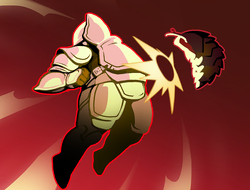
A payoff for an established Block engine, not a reason to start building one.
Early decks rarely generate enough reliable Block to justify drafting the payoff first.
Its value is determined by whether a real Block engine has already appeared.
Inside an established high-Block deck it can become efficient damage conversion.
The deck must already produce enough Block for Body Slam to become a real payoff.
Without reliable Block it is an archetype promise rather than a solution.
The available evaluation specifically identifies the upgrade as important because it removes the energy cost.

A high-variance card whose value rises when the deck can control or safely accept the top-card outcome.
The available evaluation describes very few early-game situations where surrendering control is worth the risk.
The card becomes more reasonable if Exhaust or top-deck control has already developed.
Late decks can create more situations where the outcome is predictable or actively desirable.
Knowing the top card removes much of Havoc’s primary risk.
The forced Exhaust can become desirable instead of a drawback.
Accidentally consuming a critical card can damage the entire combat plan.
Reducing the energy cost makes the conditional play much easier to fit into a turn.
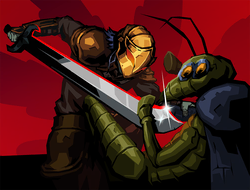
A high-risk Strength accelerator whose value depends on whether Ironclad can exploit the scaling faster than the enemy can.
The Strength can accelerate damage, but the enemy downside is dangerous before the deck has reliable defense.
Existing payoff and matchup determine whether the trade is favorable.
High enemy damage makes the downside more dangerous even though mature decks may exploit Strength more efficiently.
The deck must convert the Strength before enemy scaling becomes dangerous.
Shorter fights reduce the amount of value the enemy receives from its Strength.
Enemy Strength scales especially hard when applied across repeated hits.
If the card is already worth accepting the downside, improving the Strength gained makes the risk-reward exchange more favorable.

A powerful Block amplifier that still requires actual Block cards; amplification is not a substitute for the defensive package itself.
Its ceiling is high but early decks may not yet contain enough quality Block to exploit it.
Once the defensive package exists, doubling a meaningful Block action becomes much more valuable.
It can remain a major defensive multiplier as incoming damage grows.
The power amplifies Block; it does not create useful Block targets by itself.
The deck needs actual Block cards before another multiplier.
Additional amplification can be worse than fixing the underlying Block density.
Reducing the setup cost materially improves the ability to establish the power without sacrificing the turn.

A Strength payoff supported by high-Ascension run evidence after the deck already has scaling but lacks a strong way to convert it into damage.
This pick decision was reviewed for v0.107.1 Main . Maul currently differs in v0.111.0 Beta . Treat the recommendation above as Main guidance until its Beta-specific pick judgment is reviewed.
See Main vs Beta changes →The available evidence supports Maul after Strength is online, not as the first card used to force that direction.
Its value rises sharply if Strength already exists and needs a payoff.
A mature Strength package can turn it into the damage conversion the deck was missing.
Existing Strength is the primary reason the payoff becomes attractive.
The A10 run becomes interested specifically after accumulating Strength without sufficient damage conversion.
The evidence does not support drafting the payoff first and hoping the engine appears later.
The current evidence strongly supports Maul’s role as a Strength payoff, but does not provide enough basis to claim that its upgrade should outrank other upgrades.
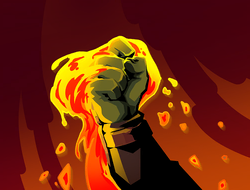
A strong damage-and-debuff card whose value rises further when Weak, Vulnerable, or Artifact stripping matters in the upcoming matchup.
The card provides practical damage while adding important debuff access.
Weak and Vulnerable continue supporting both survival and damage.
The available evaluation specifically identifies it as useful even later in the run.
Weak access improves defensive control.
Existing Vulnerable plans increase the value of reliable application.
Applying multiple separate debuffs helps remove Artifact layers before the main debuff plan begins working.
Its utility is harder to exploit if the cost prevents the rest of the turn from functioning.
The upgrade strengthens both debuffs, making the card especially effective when repeated debuff application or Artifact stripping matters.
Aeonglass begins with Artifact, and the A10 matchup guide specifically identifies Uppercut as an effective way for Ironclad to strip multiple layers.

Powerful eventual Strength scaling with a serious setup problem: the deck must survive an expensive turn and then wait for the scaling to begin paying back the investment.
Demon Form scales Strength faster in Beta, improving its long-fight payoff. Its main drafting constraint is still the expensive setup turn, so the existing speculative baseline remains appropriate.
See Main vs Beta changes →Early decks usually cannot afford a slow expensive setup card while basic survival problems remain unsolved.
It becomes playable only when energy and defense can absorb the setup cost.
Long fights reward scaling, but mature decks often have faster or cheaper ways to generate Strength.
Reducing or bypassing the expensive setup turn directly attacks the card’s biggest weakness.
The card has time to become useful only when the fight lasts long enough.
An expensive setup turn can leave the deck unable to defend or deal necessary damage.
Delayed Strength does not solve a dangerous current turn.
The available evidence identifies setup cost and delayed payoff as the main weaknesses; increasing eventual scaling does not remove those weaknesses.
Immediate damage attached to uncontrolled Exhaust; the random target makes the downside fundamentally different from Ironclad’s stronger targeted Exhaust tools.
Early decks depend heavily on a small number of important cards, making random Exhaust dangerous.
It can become less dangerous if the deck has enough disposable cards or Exhaust payoff.
A mature deck may tolerate the downside better, but lack of control remains a real cost.
An Exhaust payoff can recover some value from the downside.
Random Exhaust is dangerous when losing the wrong card can break the combat plan.
Controlled Exhaust provides engine value without accepting the same randomness.
More damage does not solve the main problem: the Exhaust target remains uncontrolled.
Do not start with the card name. Start with the problem the current deck still fails to solve.
Are hallway fights and Elites lasting long enough that chip damage is becoming the real threat?
Does the deck have a reliable answer when several enemies need to be damaged quickly?
Do ordinary bad draws leave the deck unable to absorb a meaningful enemy turn?
Is the deck powerful when it finds the right cards but inconsistent at reaching them?
Are strong cards regularly stranded in hand because the deck cannot afford the turn it wants to play?
Is the deck already losing HP on its own turn without converting that cost into enough scaling or defense?
Are cards already being Exhausted often enough that Block or draw payoffs would trigger repeatedly?
Is the deck generating significant Strength without enough attacks that convert that scaling into a fast kill?
Would reliable debuff application solve an upcoming fight or improve an existing Vulnerable plan?
Skip another ordinary attack once the deck already has enough frontloaded damage for the current Act.
Skip a payoff when its required engine is still hypothetical rather than already present.
Skip an additional engine piece when the deck lacks the cards that actually trigger or exploit that engine.
Skip when a card duplicates a solved job but makes the important powers, Block cards, or payoffs harder to draw.
Do not treat Burning Blood or other healing as permission to ignore HP pressure from repeated self-damage.
Upcoming Boss mechanics can justify a card that would otherwise be only average, so evaluate the next major matchup before taking a generic upgrade to the deck.